The world is filled with magnificent monuments, breathtaking structures, and remarkable creations that reflect the intelligence, creativity, and determination of human beings. Among these, the Seven Wonders of the World are considered some of the most extraordinary and fascinating landmarks ever created. They represent different cultures, civilizations, historical periods, and architectural achievements.
The term “Seven Wonders of the World” has been used for centuries. The original list was created by ancient Greek writers who wanted to identify the most impressive structures known to them. However, most of those ancient wonders no longer exist. In modern times, a worldwide voting campaign resulted in a new list of New Seven Wonders of the World, announced in 2007.
The New Seven Wonders are the Great Wall of China, Petra, Christ the Redeemer, Machu Picchu, Chichén Itzá, the Colosseum, and the Taj Mahal. These monuments attract millions of visitors and continue to inspire people with their beauty, history, engineering, and cultural importance.
1. The Great Wall of China
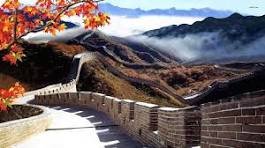
The Great Wall of China is one of the most impressive architectural achievements in human history. It stretches across northern China and was constructed, rebuilt, and expanded by different Chinese dynasties over many centuries.
The primary purpose of the wall was to protect Chinese territories from invasions and raids. Contrary to the popular belief that it was built as one continuous structure at one time, the Great Wall consists of numerous sections and defensive structures constructed during different periods.
The wall includes watchtowers, fortresses, gates, and defensive barriers. Its construction involved enormous amounts of labor and resources. The landscape around the wall ranges from mountains and deserts to grasslands, making it an extraordinary combination of human engineering and natural surroundings.
Today, the Great Wall is a major tourist attraction and an important symbol of Chinese history and civilization. It demonstrates the strategic thinking, organizational abilities, and engineering skills of ancient Chinese societies.
2. Petra, Jordan
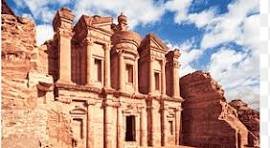
Petra is an ancient city located in present-day Jordan. It is famous for its magnificent buildings carved directly into rose-colored sandstone cliffs, which has earned it the nickname “Rose City.”
Petra was an important center of trade and was particularly associated with the Nabataean civilization. Its location allowed it to become an important trading hub connecting different regions of the ancient world.
One of Petra’s most famous structures is Al-Khazneh, commonly known as “The Treasury.” Its impressive façade, carved into the rock, is one of the most recognizable sights in Jordan. Another important feature is the Siq, a narrow natural passage through which visitors enter the ancient city.
Petra demonstrates the remarkable architectural and engineering abilities of its builders. The city also contains tombs, temples, streets, water channels, and other structures.
Today, Petra is one of Jordan’s most important cultural landmarks and provides valuable insight into the history, trade, architecture, and lifestyle of the ancient Nabataeans.
3. Christ the Redeemer, Brazil
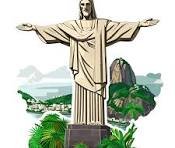
Christ the Redeemer is a huge statue of Jesus Christ standing above Rio de Janeiro, Brazil. Located on Mount Corcovado, the statue overlooks the city and has become one of Brazil’s most recognizable landmarks.
The statue was completed in 1931 and stands with its arms extended outward, creating a powerful image of peace, welcome, and Christianity. It was designed by Brazilian engineer Heitor da Silva Costa, with contributions from French sculptor Paul Landowski.
The monument is made primarily of reinforced concrete and covered with soapstone. Its enormous size and location on top of a mountain make it particularly impressive.
Apart from its religious significance, Christ the Redeemer has become an important cultural symbol of Rio de Janeiro and Brazil. Visitors from around the world travel to the monument to experience its spectacular views of the city, coastline, and surrounding mountains.
4. Machu Picchu, Peru
Machu Picchu is an ancient Inca site located high in the Andes Mountains of Peru. It was built during the 15th century and is famous for its extraordinary location, stone architecture, and mysterious history.
The site contains terraces, temples, residences, plazas, and carefully constructed stone structures. The Incas used sophisticated techniques to fit large stones together with remarkable precision.
Machu Picchu’s exact purpose continues to be studied. It may have served as a royal estate, religious center, or important ceremonial and administrative site.
The location of Machu Picchu is one of its most remarkable features. Surrounded by steep green mountains and clouds, the ancient settlement appears to blend naturally into its environment.
The site provides evidence of the advanced knowledge of the Inca civilization in agriculture, architecture, astronomy, and water management. Today, Machu Picchu is one of South America’s most famous tourist destinations and an important symbol of Peru’s indigenous heritage.
5. Chichén Itzá, Mexico

Chichén Itzá is an ancient archaeological site located in Mexico’s Yucatán Peninsula. It was one of the most important cities of the Maya civilization and became a significant political, economic, and religious center.
The most famous structure at Chichén Itzá is El Castillo, also known as the Temple of Kukulcán. This large step pyramid reflects the Maya civilization’s advanced understanding of mathematics, astronomy, and architecture.
The site also includes a Great Ball Court, temples, columns, and other important structures. The Maya were skilled astronomers and developed sophisticated calendars and mathematical systems.
Chichén Itzá demonstrates how closely religion, science, architecture, and everyday life were connected in Maya society. The monument is particularly famous for the shadow-and-light effect that appears on the pyramid during the equinoxes, resembling the movement of a serpent.
Today, Chichén Itzá is an important symbol of Maya civilization and one of Mexico’s most visited archaeological sites.
6. The Colosseum, Italy
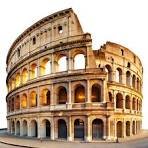
The Colosseum, located in Rome, Italy, is one of the most famous surviving structures of the ancient Roman Empire. Construction began under Emperor Vespasian and was completed under his successor Titus in the first century CE.
The enormous amphitheater could accommodate tens of thousands of spectators. It was used for public entertainment, including gladiatorial contests, animal hunts, and other spectacles.
The Colosseum demonstrates the advanced engineering abilities of the Romans. Its design included multiple entrances, corridors, stairways, seating sections, and systems that helped manage large crowds.
Although earthquakes, natural deterioration, and the reuse of its materials damaged the structure over the centuries, a significant portion of the Colosseum still survives.
Today, it stands as a powerful reminder of the scale and complexity of ancient Roman society. It is also one of Rome’s most important tourist attractions and historical landmarks.
7. The Taj Mahal, India
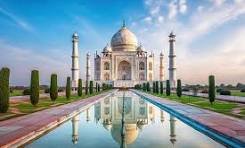
The Taj Mahal in Agra, India, is one of the world’s most famous monuments and a masterpiece of Mughal architecture. It was commissioned by Mughal emperor Shah Jahan in memory of his wife Mumtaz Mahal.
Construction began in the 17th century, and the complex includes a magnificent white-marble mausoleum, gardens, a mosque, a guest house, and other structures.
The central dome and four surrounding minarets create the monument’s distinctive appearance. The marble is decorated with intricate carvings and inlay work using precious and semi-precious stones.
The Taj Mahal is widely regarded as a symbol of love and devotion. Its architectural design combines influences from Persian, Islamic, Indian, and Central Asian traditions.
The monument changes appearance depending on the time of day and lighting conditions, making it especially famous for its beauty at sunrise and sunset.
The Taj Mahal is also an important part of India’s cultural heritage and attracts visitors from across the world.
Conclusion
The Seven Wonders of the World are much more than beautiful tourist destinations. Each monument tells a unique story about the people, civilizations, beliefs, technology, and artistic traditions that created it.
The Great Wall represents the defensive and organizational capabilities of ancient China. Petra reflects the achievements of the Nabataean civilization. Christ the Redeemer represents modern monumental sculpture and has become a symbol of Brazil. Machu Picchu showcases the remarkable achievements of the Inca civilization. Chichén Itzá demonstrates the scientific and architectural knowledge of the Maya. The Colosseum reflects the engineering and social world of ancient Rome. The Taj Mahal stands as a timeless symbol of love and extraordinary Mughal architecture.
Together, these seven wonders demonstrate the incredible diversity of human civilization. They remind us that people from different cultures and different periods of history have created structures capable of surviving for centuries and inspiring generations.
The Seven Wonders therefore represent not only architectural excellence but also human imagination, determination, cultural heritage, and the desire to create something extraordinary that can be remembered for generations.